
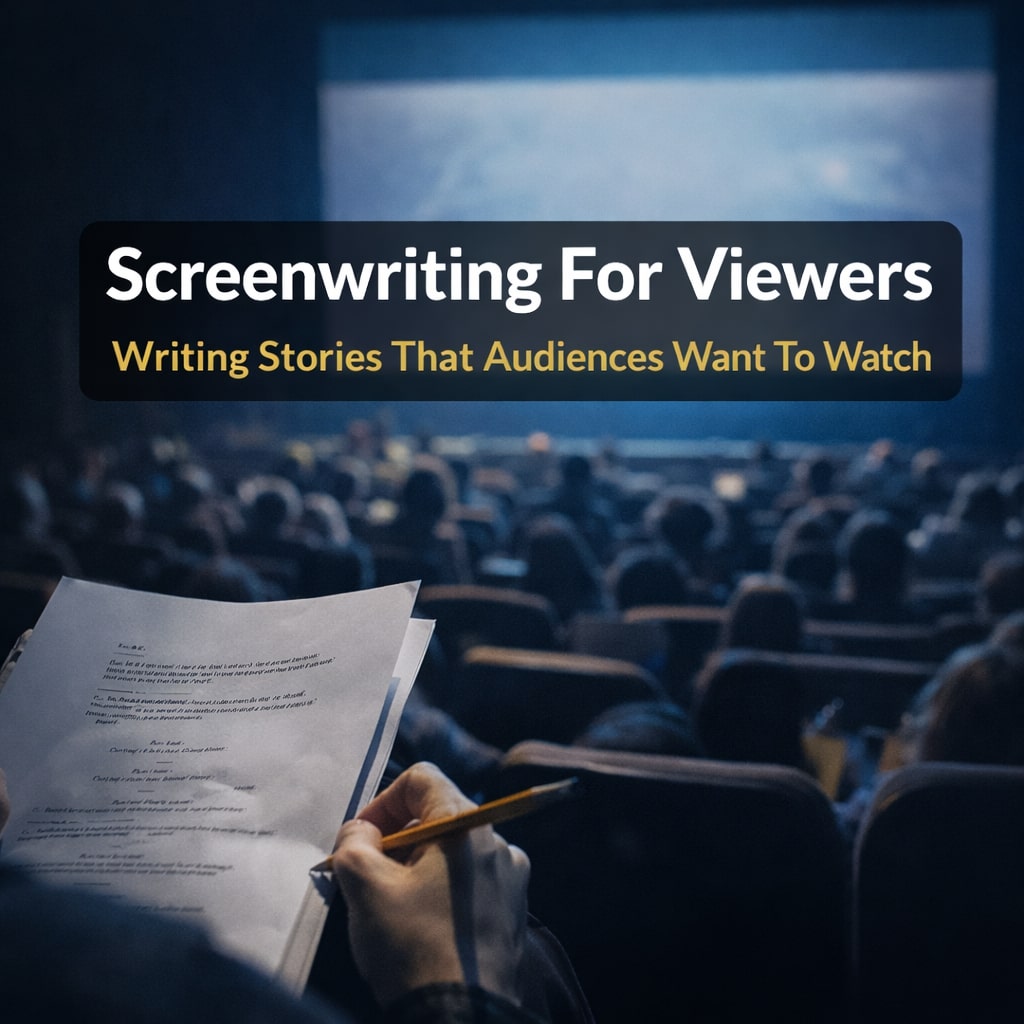
When people think about screenwriting, they often focus on how scripts serve actors or directors. While those perspectives are essential, there is another equally important angle that is often overlooked: screenwriting for viewers.
At its core, screenwriting exists for one reason: to engage an audience. Every scene, line of dialogue, and structural choice ultimately shapes how viewers experience a story. Screenwriting for viewers means writing with emotional impact, clarity, and momentum, ensuring that the story holds attention from the opening frame to the final moment.
This article explores what screenwriting for viewers really means, why it matters, and how writers can craft scripts that resonate with audiences rather than just work on the page.
What does screenwriting for viewers mean?

Screenwriting for viewers is the practice of writing scripts with the audience’s experience as the primary focus. It asks a simple but powerful question:
How will this moment feel to someone watching it unfold on screen?
Rather than concentrating solely on performance beats or camera direction, this approach prioritises:
- Emotional engagement
- Narrative clarity
- Pacing and rhythm
- Satisfaction and payoff
A script written with viewers in mind ensures that the story is not only technically sound, but also compelling to watch.
Why viewers are the final judge of a screenplay
No matter how strong a script may be for actors or directors, its success ultimately depends on how it connects with viewers. Audiences decide whether a story is:
- Engaging or boring
- Confusing or clear
- Predictable or surprising
- Worth finishing or switching off
Screenwriting for viewers recognises that audiences do not analyse scripts intellectually while watching. They respond emotionally and instinctively. If the story loses momentum or emotional truth, viewers disengage, regardless of how well it is structured on paper.
Story clarity over complexity

One of the biggest mistakes writers make is confusing complexity with depth. From a viewer’s perspective, clarity is far more important.
Screenwriting for viewers prioritises:
- Clear character motivations
- Understandable stakes
- Logical cause-and-effect storytelling
This does not mean stories must be simple. It means that even complex narratives should be easy to follow emotionally. If viewers have to work too hard to understand what is happening, the emotional connection is lost.
Emotional investment is everything
Viewers do not remember every plot detail, but they remember how a story made them feel. Screenwriting for viewers focuses on creating emotional investment through:
- Relatable characters
- Meaningful conflict
- Consequences that matter
When viewers care about the outcome, they remain engaged even during quieter moments. Without emotional investment, even visually impressive scenes can feel hollow.
Pacing from the audience’s point of view
Pacing is often discussed in technical terms, but screenwriting for viewers reframes it as an experience issue.
From a viewer’s perspective:
- Scenes should not overstay their welcome
- Information should arrive when it is needed
- Momentum should feel purposeful, not rushed
Good pacing keeps viewers leaning forward. Poor pacing makes them check the time.
Writing with pacing in mind means constantly asking how each scene contributes to the viewer’s experience, not just the plot outline.
Setups and payoffs that satisfy audiences
Viewers may not consciously notice setups and payoffs, but they feel when they are missing. Screenwriting for viewers ensures that:
- Important story elements are properly introduced
- Character decisions have consequences
- Payoffs feel earned rather than convenient
When a payoff lands correctly, viewers experience satisfaction rather than surprise for the sake of surprise.
Balancing spectacle and substance

Modern audiences are visually savvy. They expect strong visuals, but they also expect meaning behind them. Screenwriting for viewers balances:
- Visual spectacle
- Character-driven storytelling
- Narrative purpose
Spectacle without substance may impress briefly, but it rarely stays with an audience. Substance without momentum risks losing attention. The best scripts give viewers both.
How this connects to actors and directors
Screenwriting for viewers does not replace writing for actors or directors: it complements it.
- Screenwriting for actors ensures performances feel authentic and playable
- Screenwriting for directors ensures the story can be translated visually and structurally
- Screenwriting for viewers ensures the finished film or series is emotionally engaging and satisfying
When all three perspectives align, the result is a script that works on every level of production and, most importantly, on screen.
Writing with the audience in mind from page one
Screenwriting for viewers starts at the very first page. Strong openings, clear tone, and immediate engagement signal to the audience what kind of story they are about to experience.
By continually considering how scenes will feel when watched rather than read, writers can create scripts that connect deeply with viewers and stand out in an increasingly crowded entertainment landscape.
Conclusion: why screenwriting for viewers matters most
Screenwriting is a collaborative art form, but viewers are the reason stories exist in the first place. Screenwriting for viewers ensures that scripts are not only technically competent, but emotionally resonant, engaging, and memorable.
By writing with the audience’s experience in mind, screenwriters can create stories that hold attention, deliver satisfaction, and leave a lasting impact long after the screen fades to black.