
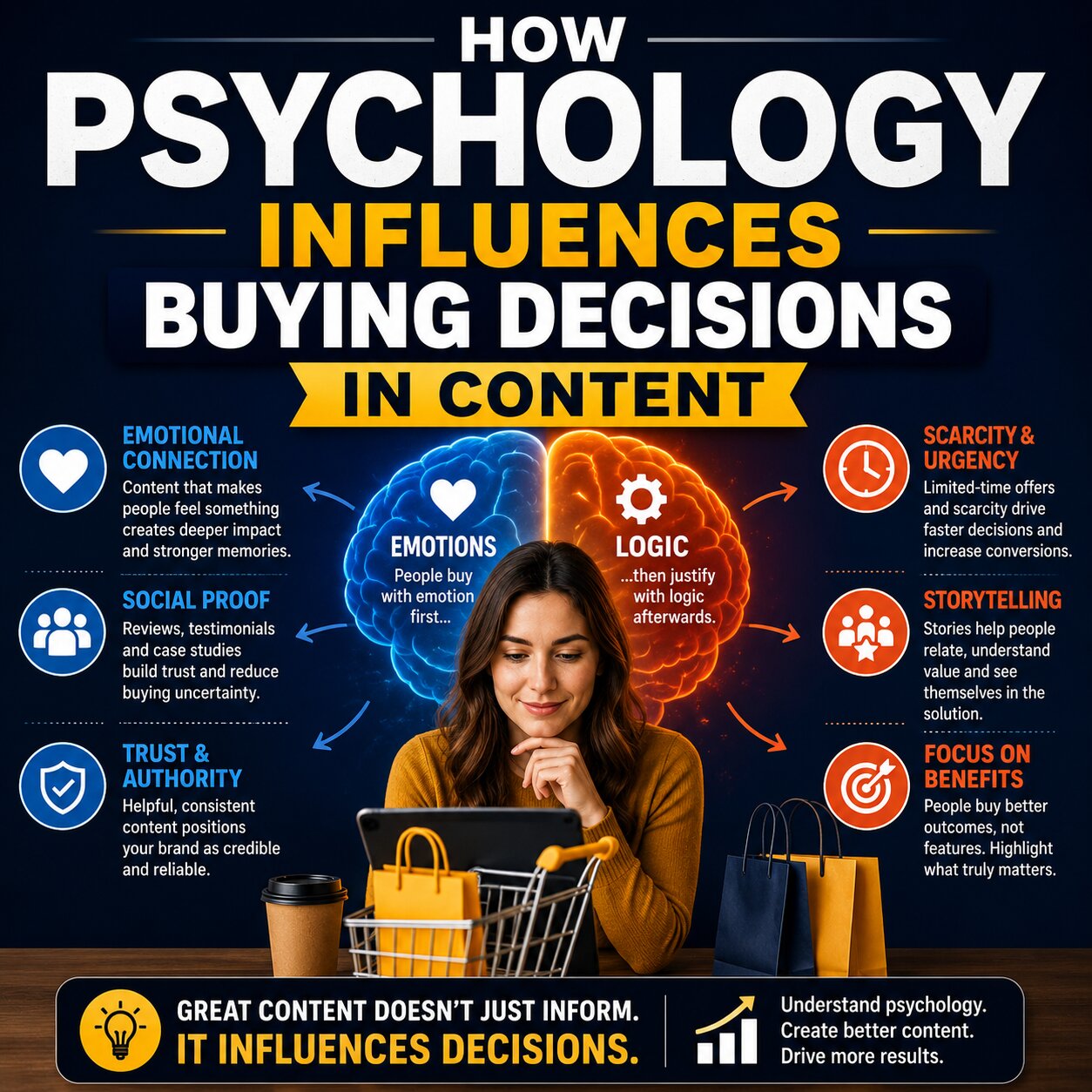
Understanding how psychology influences buying decisions in content has become one of the most important factors in modern marketing. Businesses no longer compete only on price or product quality. They also compete for attention, trust, emotional connection, and perceived value through the content they create.
From website copy and blog articles to social media campaigns and email marketing, content shapes how people think, feel, and respond to a brand. Successful businesses understand that buying decisions are often emotional first and logical second. This is where psychology-driven content becomes a powerful tool for increasing engagement, conversions, and customer loyalty.
For brands looking to improve their marketing performance, understanding buyer psychology can dramatically improve how content connects with audiences.
The emotional side of buying decisions

Most purchasing decisions are influenced by emotions, even when customers believe they are making purely rational choices. People often buy products or services because of how they expect those purchases to make them feel.
Content plays a major role in shaping those emotional responses. Words, visuals, storytelling, tone, and messaging all influence whether a reader feels excitement, trust, fear, urgency, confidence, or curiosity.
For example, luxury brands often use emotional content focused on status, exclusivity, and aspiration. Fitness brands frequently target motivation, confidence, and transformation. Technology companies may focus on security, efficiency, or innovation.
Storytelling is one of the most powerful psychological tools in content marketing. Stories help audiences emotionally connect with a problem, solution, or brand experience. Readers often remember emotional narratives far more effectively than direct sales pitches.
Trust also plays a major psychological role. Customers are more likely to buy from businesses that appear knowledgeable, authentic, and reliable. Consistent, high-quality content helps build that trust over time.
Psychological triggers used in marketing content

Many successful marketing campaigns use specific psychological principles to influence buying decisions. These techniques help guide readers toward taking action while making content more persuasive and engaging.
Scarcity and urgency are commonly used triggers. Limited-time offers, countdowns, and low-stock messaging encourage customers to act quickly because they fear missing out on an opportunity.
Social proof is another powerful factor. Reviews, testimonials, case studies, and user-generated content help reassure potential customers that others trust the brand or product.
Authority also strongly influences decision-making. Expert articles, professional branding, certifications, interviews, and educational content position businesses as credible leaders within their industries.
Some common psychological triggers used in content include:
- Fear of missing out (FOMO)
- Trust and authority building
- Emotional storytelling
- Scarcity and urgency
- Social proof and testimonials
When used ethically, these techniques help businesses create more meaningful connections with their audiences while improving conversions.
Why audience understanding matters

Effective psychology-driven content starts with understanding the target audience. Businesses that fail to understand customer motivations often create generic content that struggles to connect emotionally.
Audience research helps marketers identify customer pain points, goals, frustrations, desires, and behavioural patterns. This information allows businesses to craft messaging that speaks directly to what their audience cares about most.
Different audiences respond to different emotional triggers. A corporate decision-maker may respond more strongly to efficiency, reliability, and risk reduction, while lifestyle consumers may react more emotionally to identity, aspiration, or belonging.
Tone and language also influence perception. Friendly and conversational writing may help some brands feel more approachable, while formal and professional language may increase credibility in other industries.
Psychology in content marketing is not about manipulation. It is about understanding how people think and creating content that genuinely addresses their needs, concerns, and interests.
Creating stronger content through psychology
Understanding how psychology influences buying decisions in content allows businesses to create more persuasive, engaging, and effective marketing strategies. Emotional connection, trust, storytelling, authority, and audience understanding all contribute to how customers respond to content and make purchasing decisions.
As competition for online attention continues increasing, businesses that understand customer psychology will have a stronger advantage when building relationships and guiding potential customers toward action. Effective content is no longer just about information. It is about creating meaningful experiences that influence how people think, feel, and ultimately decide to buy.