Managing multiple content projects simultaneously can quickly become overwhelming without the right systems in place. Content agencies often handle numerous clients, deadlines, platforms, campaigns, and revisions at the same time, making organisation and workflow management essential for success.
Modern agencies rely on structured processes, communication systems, and scalable workflows to keep projects moving smoothly. Without efficient systems, delays, inconsistent quality, and missed opportunities can damage both client relationships and business growth.
Understanding how agencies manage multiple content projects efficiently provides valuable insight for businesses looking to improve their own content operations and productivity.
Building structured content workflows

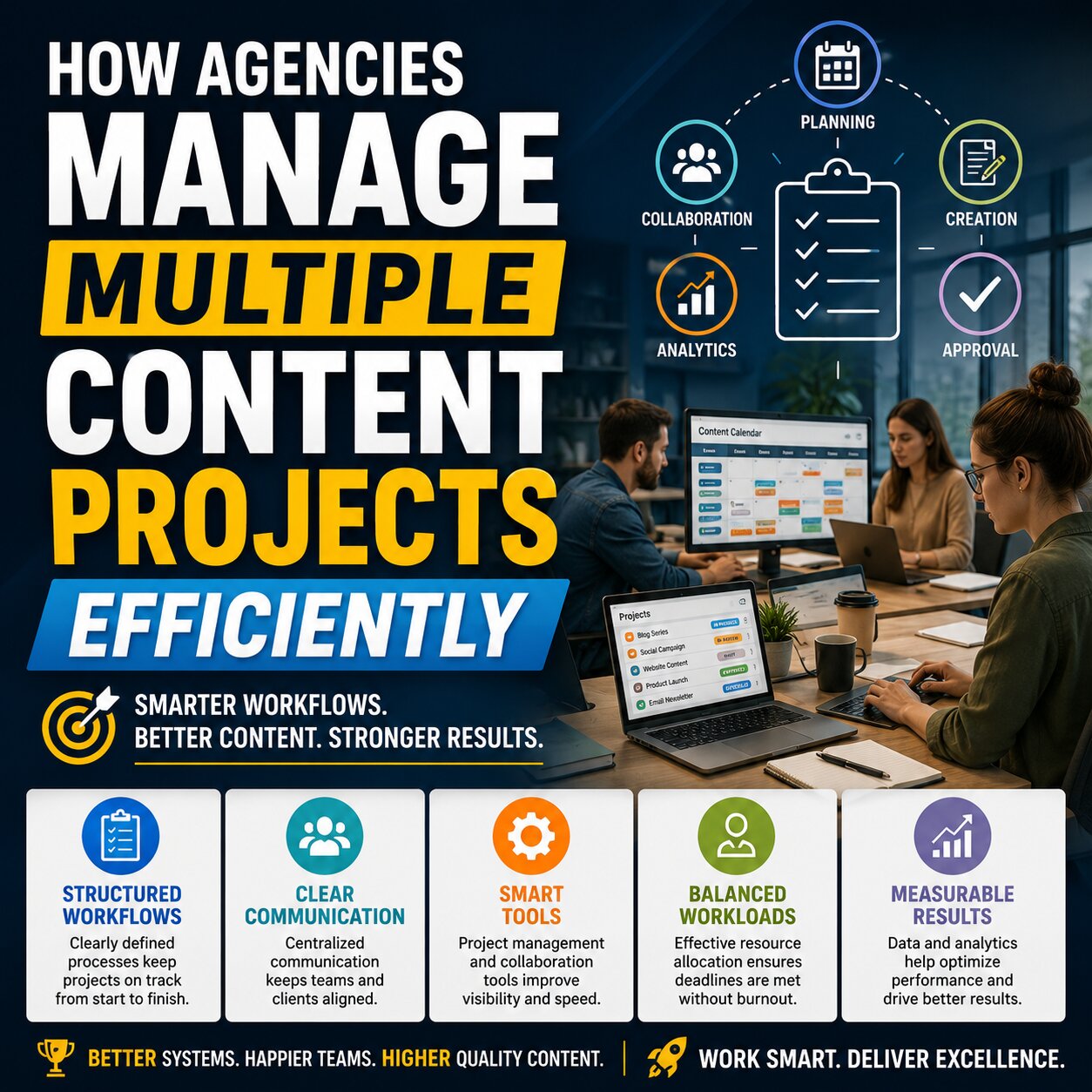
One of the most important factors behind efficient content management is the creation of structured workflows. Agencies rarely rely on improvisation when managing large content volumes. Instead, they develop repeatable systems that guide projects from planning to publication.
A typical workflow often includes content planning, research, writing, editing, approval, design integration, SEO optimisation, scheduling, and reporting. Breaking the process into clear stages helps teams understand responsibilities and reduces confusion during production.
Structured workflows also allow agencies to identify bottlenecks more easily. If delays occur repeatedly during editing or approvals, processes can be adjusted to improve efficiency and turnaround times.
The more organised the workflow becomes, the easier it is for agencies to scale content production without sacrificing quality.
Using project management and collaboration tools

Technology plays a major role in helping agencies manage multiple content projects efficiently. Project management platforms allow teams to organise tasks, assign responsibilities, monitor progress, and centralise communication in one place.
These systems help agencies maintain visibility across multiple clients and campaigns simultaneously. Team members can quickly see deadlines, content statuses, revision requests, and publishing schedules without relying on endless email chains.
Many agencies also integrate collaboration tools that streamline communication between writers, editors, designers, SEO specialists, and clients. Real-time updates help reduce delays and improve coordination across departments.
Common tools and systems agencies may use include:
- Project management platforms
- Shared editorial calendars
- Content approval systems
- Cloud-based document collaboration
- Internal communication channels
- Workflow automation tools
The right technology reduces administrative workload and helps teams focus more on delivering quality content.
Maintaining clear communication channels

Strong communication is essential when handling multiple projects at once. Agencies often work with several stakeholders simultaneously, including clients, writers, editors, developers, and marketing teams.
Clear communication helps prevent misunderstandings, duplicated work, and missed deadlines. Agencies usually establish dedicated communication channels and approval processes to ensure everyone remains aligned throughout the project lifecycle.
Internal team communication is equally important. Writers need clear briefs, editors require timelines, and clients must understand project expectations and delivery schedules. Without clarity, even simple projects can become disorganised.
Efficient agencies prioritise transparency and consistency in communication, helping projects move forward with fewer disruptions.
Balancing workloads and resource allocation
Managing workloads effectively is another major challenge for agencies handling multiple content campaigns. Overloading team members often leads to burnout, rushed work, and declining quality.
Successful agencies carefully allocate resources based on project size, deadlines, complexity, and team strengths. Some projects may require specialist writers, while others need additional SEO or design support.
Agencies also use scheduling strategies to distribute work evenly across the production calendar. This helps avoid situations where large amounts of content are due simultaneously.
Balancing workloads properly allows agencies to maintain consistency while supporting long-term productivity and employee wellbeing.
Creating scalable systems for multiple content projects
As agencies grow, scalability becomes increasingly important. Efficient agencies build systems that allow them to handle larger content volumes without constantly reinventing their processes.
Templates, standard operating procedures, style guides, onboarding systems, and reusable workflows all contribute to scalability. These systems help maintain consistency across multiple projects and team members.
Scalable systems also improve training and onboarding for new writers or editors joining the agency. Instead of learning everything from scratch, new team members can quickly adapt to established processes.
The goal is not to remove creativity from content production, but to reduce unnecessary friction that slows projects down.
Smarter systems create stronger content operations
Learning how agencies manage multiple content projects efficiently reveals the importance of structure, communication, technology, and workflow optimisation. Successful agencies rarely rely on chaos or last-minute organisation to deliver consistent results.
By implementing clear systems, balancing workloads, and using scalable processes, agencies can manage high content volumes while maintaining quality and meeting deadlines.
Businesses looking to improve their own content operations can benefit greatly from adopting similar strategies. If you need support managing growing content demands, contact us today to discuss professional content workflow solutions tailored to your business.