
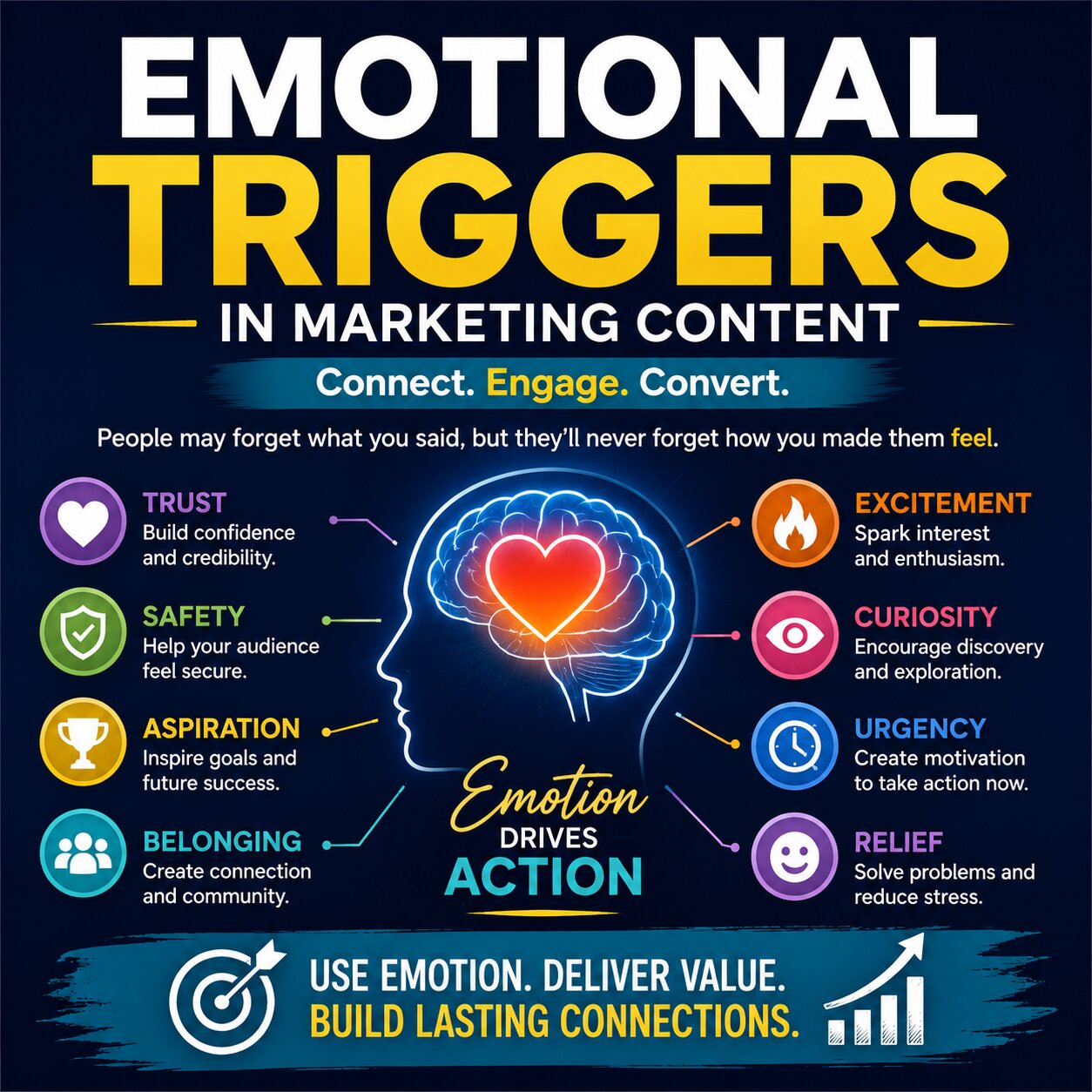
Marketing is not driven by logic alone. While pricing, features, and specifications matter, emotional connection often determines whether someone engages with content, trusts a brand, or makes a purchasing decision. Businesses that understand emotional triggers in marketing content can create stronger relationships with their audiences and improve the effectiveness of their messaging.
Emotional marketing focuses on how people feel rather than simply what they think. Fear, excitement, curiosity, trust, belonging, nostalgia, and aspiration all influence how consumers respond to content online. Whether it is a social media campaign, blog article, email newsletter, or website landing page, emotional engagement helps content stand out in crowded digital spaces.
Modern audiences are constantly exposed to advertisements and promotional material. Generic messaging often disappears into the background noise, while emotionally driven content captures attention more effectively. This is why successful brands frequently focus on storytelling, relatability, and emotional resonance within their marketing strategies.
Understanding emotional triggers in marketing content allows businesses to communicate more naturally with their audiences while building stronger brand loyalty over time.
Why Emotions Matter in Marketing

People often justify purchases logically, but many buying decisions begin emotionally. Consumers may choose products or services because they solve frustrations, provide comfort, create excitement, reduce anxiety, or help them feel more confident.
Fear of missing out is one of the most common emotional triggers in marketing content. Limited-time offers, exclusive opportunities, and scarcity messaging encourage audiences to act quickly before losing access to something valuable.
Trust is another critical emotional factor. Customers are more likely to buy from businesses that appear reliable, knowledgeable, and authentic. Consistent branding, testimonials, professional communication, and educational content all help establish emotional reassurance.
Positive emotions also play a major role. Hope, inspiration, achievement, and belonging can motivate audiences to engage with a brand more deeply. Companies that make audiences feel understood often create stronger long-term customer relationships.
Common Emotional Triggers in Marketing Content

Different emotional triggers serve different marketing goals depending on the audience and industry. Successful content creators often combine several emotional responses within a single campaign to strengthen engagement and conversions.
Some of the most effective emotional triggers include:
- Curiosity and mystery
- Fear of missing out
- Trust and credibility
- Aspiration and success
- Security and safety
- Belonging and community
- Excitement and anticipation
- Nostalgia and familiarity
- Empathy and emotional understanding
- Relief from stress or frustration
The key is using these triggers naturally rather than manipulatively. Audiences can quickly recognise content that feels forced or emotionally dishonest.
Businesses should also understand their target audience carefully before choosing emotional approaches. A corporate B2B audience may respond more strongly to trust and efficiency, while entertainment audiences may engage more with excitement and anticipation.
Storytelling as an Emotional Marketing Tool

Storytelling remains one of the most powerful methods for activating emotional triggers in marketing content. Stories help audiences connect with brands on a human level rather than viewing them as faceless businesses.
Good storytelling creates emotional investment. Readers begin caring about outcomes, challenges, or transformations presented within the narrative. This is why customer success stories, founder journeys, and behind-the-scenes insights often perform well in content marketing strategies.
Stories also make complex information easier to understand. Instead of overwhelming audiences with technical explanations, businesses can demonstrate real-world situations and emotional outcomes through relatable examples.
Authenticity is especially important in modern storytelling. Audiences increasingly value transparency and genuine communication. Overly scripted or exaggerated messaging may damage trust rather than strengthen it.
Balancing Emotion and Strategy
Although emotional triggers in marketing content are highly effective, businesses still need balance. Emotional engagement should support the overall marketing objective rather than distract from it.
Strong content combines emotional resonance with practical value. Readers may initially engage because of emotional appeal, but they still need useful information, solutions, or clear calls to action before making decisions.
Consistency also matters. Brands that constantly change tone or emotional messaging may confuse audiences and weaken their identity. Successful businesses develop a recognisable communication style that aligns with their target market and long-term goals.
Data analysis can further improve emotional marketing strategies. Businesses should monitor engagement rates, click-through performance, audience retention, and conversion metrics to understand which emotional approaches resonate most effectively.
Building Stronger Audience Connections
Emotional triggers in marketing content are ultimately about human connection. People want to feel understood, inspired, reassured, or excited when engaging with brands online. Businesses that create genuine emotional engagement often stand out more effectively in competitive digital markets.
As content marketing continues evolving, emotional intelligence may become even more important for businesses seeking long-term audience growth. Artificial intelligence and automation tools can help distribute content efficiently, but authentic emotional communication remains a uniquely human strength.
For modern businesses, successful marketing is no longer simply about promoting products or services. It is about creating meaningful experiences and building relationships that audiences genuinely remember.