
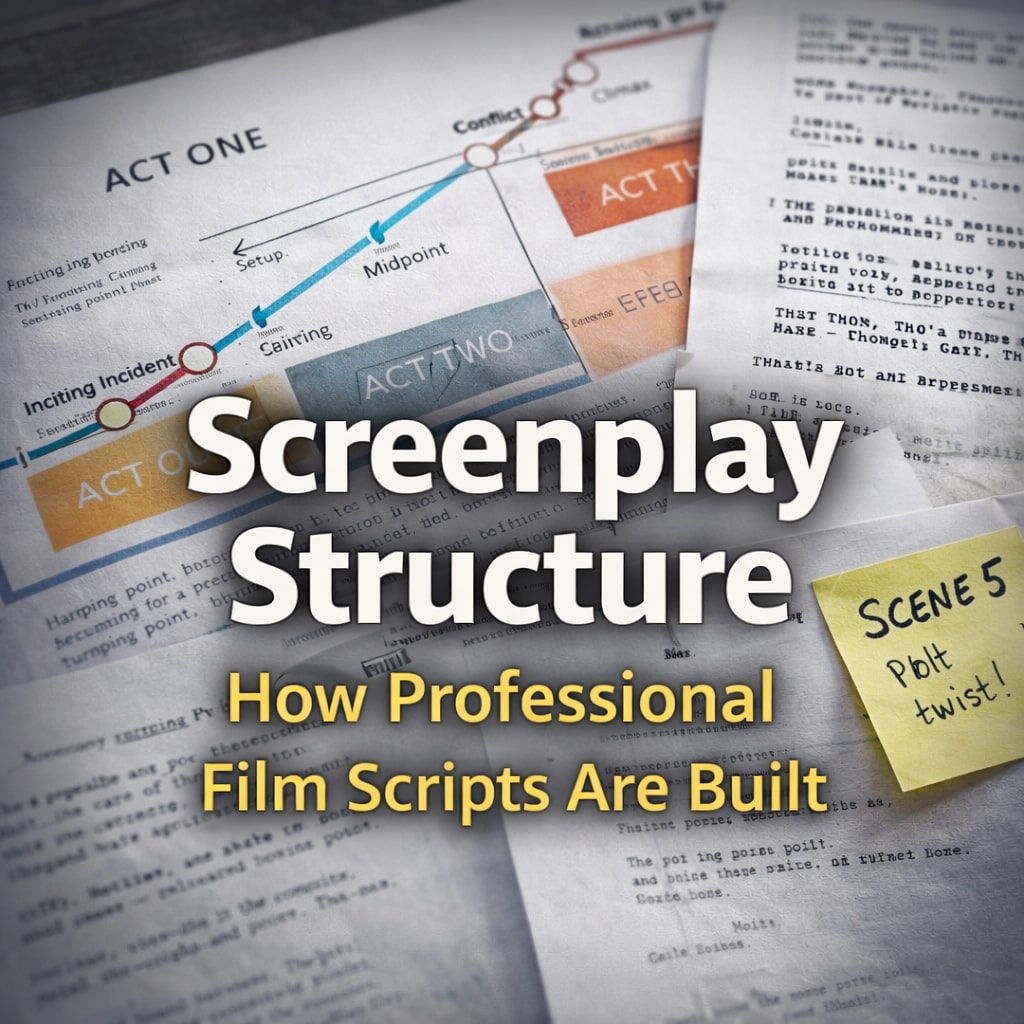
Understanding screenplay structure is essential for writing scripts that engage audiences, hold attention, and work within the realities of film production. While every great screenplay feels unique, most successful films are built on a clear structural foundation that guides pacing, character development, and emotional payoff.
This guide explains how screenplay structure works, why it matters, and how professional screenwriters use it to shape compelling stories.
What is screenplay structure?

Screenplay structure refers to the underlying framework that organises a film’s story into meaningful sections. It determines when key events occur, how tension builds, and how characters change over time.
Rather than limiting creativity, content structure provides a roadmap that helps writers control momentum and clarity, ensuring the story unfolds in a way audiences instinctively understand.
The three-act structure explained

Act One: Setup
Act One introduces the world of the story, the main characters, and the central conflict. This act establishes tone, genre, and stakes, ending with an inciting incident that pushes the protagonist into the main journey.
Key goals of Act One:
- Establish the protagonist and their normal world
- Introduce the central problem or desire
- Commit the story to forward movement
Act Two: Confrontation
Act Two forms the core of the screenplay. The protagonist faces escalating obstacles, rising tension, and increasingly difficult choices. This act is often divided into two halves, separated by a midpoint that shifts perspective or stakes.
Key goals of Act Two:
- Develop conflict and complications
- Deepen character relationships
- Raise stakes and emotional investment
Act Three: Resolution
Act Three delivers the payoff. The story reaches its climax, conflicts are resolved, and the protagonist’s journey concludes with meaningful change.
Key goals of Act Three:
- Resolve the central conflict
- Deliver emotional and thematic closure
- Show how the journey has transformed the characters
Beyond three acts: sequences and beats

Professional screenwriters often think beyond acts, breaking scripts into sequences and beats. Sequences function like mini-stories with their own goals and turning points, while beats represent individual moments of action or emotional change within scenes.
This layered approach allows for tighter pacing and more precise storytelling.
Why screenplay structure matters

Strong screenplay structure:
- Keeps audiences engaged
- Helps producers and directors visualise the film
- Makes scripts easier to evaluate and develop
- Reduces pacing and narrative issues
A well-structured screenplay reads smoothly, even before dialogue and visuals are fully realised.
Structure as a storytelling tool
Screenplay structure is not a formula to follow blindly, but a tool to shape powerful stories. By understanding how acts, sequences, and beats work together, writers gain greater control over tension, emotion, and narrative flow.
Mastering screenplay structure is one of the most important steps toward writing scripts that feel professional, cinematic, and production-ready.