

Content marketing in digital marketing plays a central role in how modern brands attract, engage, and convert audiences online. It is no longer a supporting tactic or optional add-on. Instead, it has become one of the core engines driving visibility, trust, and long-term growth across digital channels.
While many businesses invest in digital marketing tools and platforms, far fewer understand how content marketing in digital marketing actually works as a system. This often leads to disconnected campaigns, underperforming content, and wasted budgets. Understanding how content fits into the broader digital ecosystem is what separates consistent performers from brands that struggle to gain traction.
This article explores how content marketing in digital marketing functions strategically, how it supports other channels, and how to build a content approach that delivers measurable results.
Understanding content marketing in digital marketing

At its core, content marketing in digital marketing refers to the creation and distribution of valuable, relevant content designed to support digital marketing goals. This includes attracting the right audience, guiding them through the buyer journey, and supporting conversions across multiple digital touchpoints.
Unlike traditional advertising, content marketing does not rely on interruption. Instead, it focuses on relevance and timing. In effective content marketing in digital marketing, content is created to answer questions, solve problems, and position a brand as a trusted authority before a sale ever happens.
This makes content marketing uniquely powerful. It supports awareness, consideration, and decision-making simultaneously, often long after the content is first published.
How content marketing fits into the digital marketing ecosystem

One of the most common misunderstandings is treating content as a standalone activity. In reality, content marketing in digital marketing works best when it is tightly integrated with other digital channels.
Search engine optimisation relies heavily on content to rank pages and capture intent-driven traffic. Paid advertising performs better when it directs users to high-quality content rather than generic landing pages. Email marketing becomes more effective when it distributes useful content instead of constant promotions.
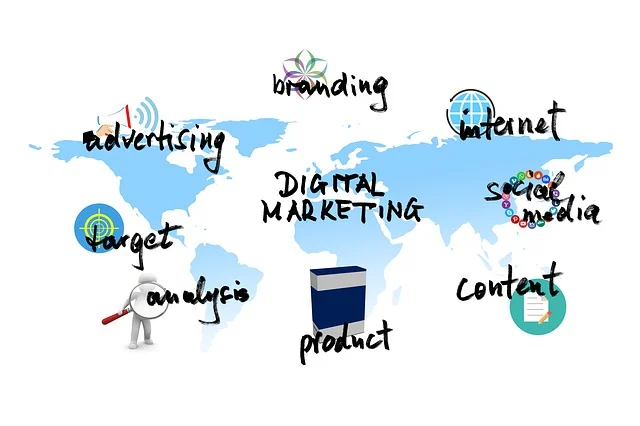
In this way, content marketing in digital marketing acts as connective tissue. It links SEO, paid media, social media, email campaigns, and even conversion rate optimisation into a cohesive system rather than a collection of isolated tactics.
Content marketing vs other digital marketing channels
It is helpful to understand how content marketing in digital marketing differs from, and complements, other channels.
Paid advertising delivers immediate visibility but stops working when spend stops. Social media increases reach and engagement but often lacks long-term discoverability. Email marketing nurtures existing audiences but depends on prior acquisition.
Content marketing operates differently. High-quality content continues to attract traffic, leads, and authority over time. In effective content marketing in digital marketing, a single article or guide can support SEO, feed social media, improve email campaigns, and strengthen brand positioning all at once.
Rather than competing with other channels, content amplifies them.
The strategic goals of content marketing in digital marketing

Successful content marketing in digital marketing is goal-driven, not volume-driven. Publishing content without clear intent is one of the fastest ways to dilute impact.
Strategic goals typically include:
- Increasing organic search visibility
- Building topical authority
- Supporting lead generation
- Improving conversion readiness
- Reducing reliance on paid traffic
- Strengthening brand trust
Each piece of content should serve at least one of these goals. When content marketing in digital marketing is aligned with business outcomes, performance becomes easier to measure and optimise.
Mapping content to the digital customer journey
One of the strongest advantages of content marketing in digital marketing is its ability to support every stage of the customer journey.
At the awareness stage, content introduces problems, concepts, and opportunities. At the consideration stage, it compares options, frameworks, and approaches. At the decision stage, it reinforces trust, reduces friction, and supports action.
When businesses fail at content marketing, it is often because all content sits at one stage. Effective content marketing in digital marketing intentionally maps content to each phase, ensuring prospects are never left without guidance.
Common mistakes in content marketing in digital marketing

Despite its popularity, content marketing in digital marketing is frequently misunderstood and poorly executed.
One common mistake is focusing on quantity over strategy. Publishing frequently without a clear structure leads to scattered messaging and weak authority. Another mistake is treating content as purely informational, without connecting it to positioning or conversion pathways.
A third issue is failing to integrate content with other digital efforts. Content marketing in digital marketing should not exist in isolation from SEO, analytics, or campaign planning. When these elements are disconnected, content underperforms regardless of quality.
Building a content marketing strategy for digital marketing success
A strong strategy is what turns content into a business asset. Effective content marketing in digital marketing starts with clarity around audience, intent, and outcomes.
This includes:
- Defining target audiences and their search intent
- Identifying priority topics and keyword themes
- Structuring pillar pages and supporting content
- Aligning content with services, products, or offers
- Planning distribution across digital channels
Without this foundation, content becomes noise. With it, content marketing in digital marketing becomes scalable and repeatable.
The role of SEO in content marketing in digital marketing

Search engine optimisation and content marketing in digital marketing are inseparable. Content gives SEO something to rank, while SEO ensures content is discoverable.
High-performing content is built around intent, not just keywords. It answers real questions, covers topics comprehensively, and demonstrates expertise. When done correctly, content marketing in digital marketing creates compounding returns as authority builds over time.
This is why long-form, well-structured content often outperforms short, surface-level posts in competitive digital spaces.
Measuring performance beyond vanity metrics
One of the biggest challenges with content marketing in digital marketing is measurement. Page views and likes alone do not reflect impact.
Meaningful metrics include:
- Organic traffic growth
- Engagement depth and time on page
- Assisted conversions
- Lead quality and readiness
- Content-influenced sales journeys
When measurement focuses on outcomes rather than attention, content marketing in digital marketing becomes easier to justify and optimise.
Why content marketing in digital marketing is a long-term advantage
Unlike many digital tactics, content compounds. A well-executed content marketing in digital marketing strategy continues delivering value long after publication.
Over time, content builds authority, reduces acquisition costs, and increases trust. It allows brands to own conversations rather than rent attention. This is why content marketing consistently shows strong ROI when approached strategically.
The brands that win digitally are rarely the ones shouting the loudest. They are the ones publishing the most useful, relevant content over time.
Final thoughts on content marketing in digital marketing
Article marketing in digital marketing is not about publishing more. It is about publishing with intent, structure, and strategic alignment.
When content is treated as a core digital asset rather than an afterthought, it strengthens every other marketing channel. It improves visibility, supports conversion, and builds lasting authority.
For businesses serious about digital growth, investing in article marketing in digital marketing is not optional. It is foundational.