
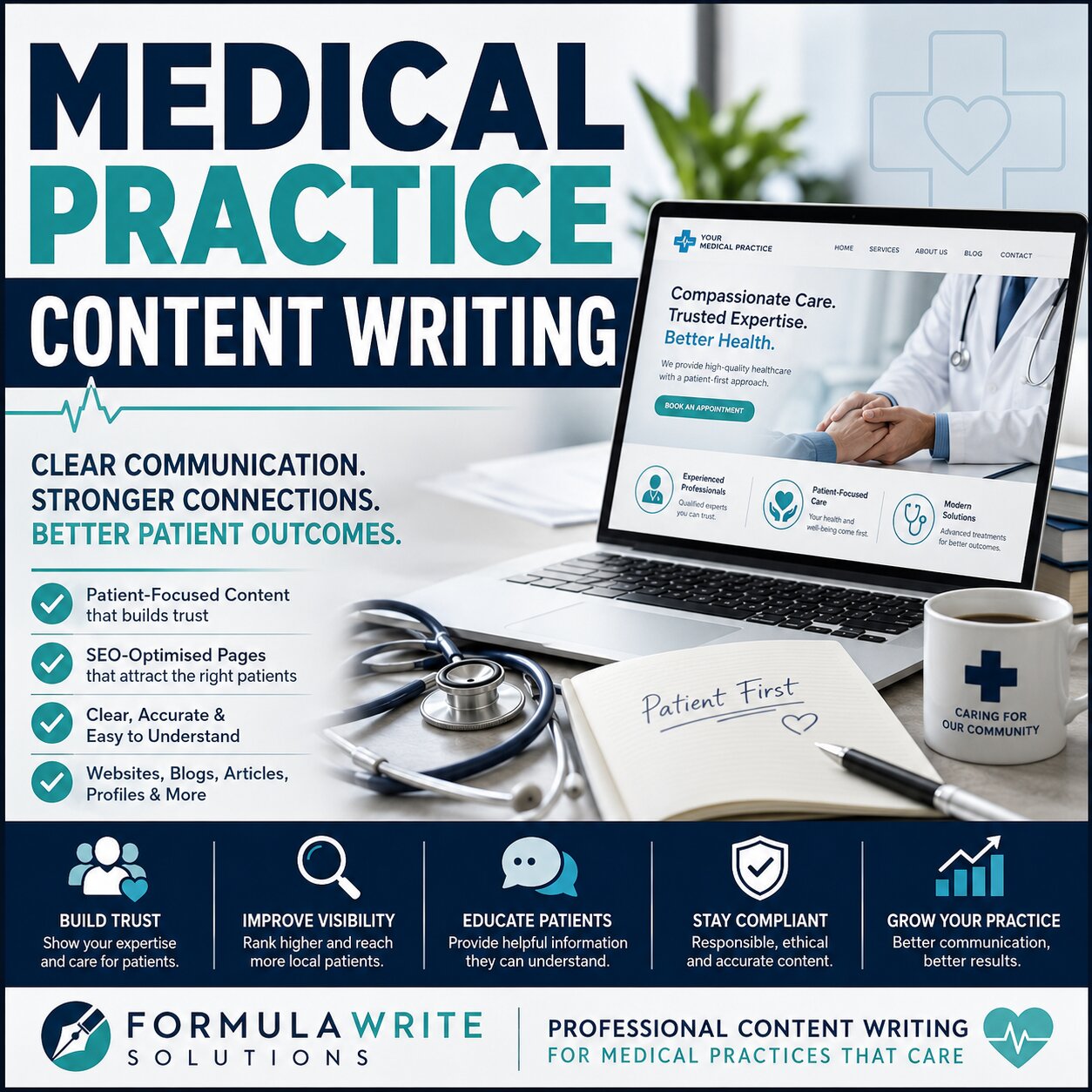
Patients often search online before choosing a doctor, clinic, specialist, or healthcare service. They want to understand their symptoms, treatment options, costs, appointment process, and whether a medical practice feels trustworthy. Professional medical practice content writing helps healthcare providers answer those questions clearly while presenting their expertise in a responsible and accessible way.
For medical practices, content is more than marketing. It is part of the patient experience. The right words can reduce uncertainty, explain complex information, and encourage people to seek appropriate care.
What Is Medical Practice Content Writing?

Medical practice content writing involves creating accurate, useful, and patient-focused content for healthcare providers. This may include general practitioners, specialists, dental practices, physiotherapists, psychologists, private clinics, diagnostic centres, and other medical professionals.
The goal is to communicate services in a way that patients can understand without oversimplifying important information. Medical terminology often needs to be translated into plain language while maintaining accuracy and professionalism.
Content should also reflect the practice’s tone, values, qualifications, and approach to patient care.
Content Medical Practices May Need
A medical practice usually requires more than a basic home page and contact details. Patients expect to find helpful information before making an enquiry or booking an appointment.
Common content requirements include:
- Website service pages
- Doctor and practitioner profiles
- Condition and treatment guides
- Frequently asked questions
- Blog articles
- Patient preparation instructions
- Aftercare information
- Appointment and billing explanations
- Email newsletters
- Social media content
Each format serves a different purpose, but all content should remain consistent, reassuring, and easy to navigate.
Making Complex Medical Information Easier to Understand

One of the greatest challenges in medical practice content writing is simplifying complex subjects without creating misleading claims.
Patients may be unfamiliar with medical terminology, diagnostic processes, or treatment pathways. Clear writing helps them understand what a service involves, why it may be recommended, and what they can expect during an appointment.
Good healthcare content avoids unnecessary jargon. Where technical terms are needed, they should be explained naturally.
The content should also make clear that general online information does not replace a consultation with a qualified medical professional.
Building Patient Trust Online
Trust is essential in healthcare marketing.
A patient may hesitate to contact a practice if its website feels outdated, confusing, impersonal, or overly promotional. Professional content helps demonstrate competence while creating a welcoming first impression.
Strong practitioner profiles can introduce qualifications, professional interests, and treatment philosophies. Service pages can explain the practice’s processes, while helpful articles show a commitment to patient education.
The tone should remain confident but never exaggerated. Healthcare audiences are more likely to respond to clarity and empathy than aggressive sales language.
Supporting Healthcare SEO
Search engine optimisation can help medical practices become more visible to people looking for relevant services.
Effective medical practice content writing can target searches related to conditions, treatments, practitioner types, and local healthcare needs. However, keyword use should never make the writing feel unnatural or reduce medical accuracy.
Useful SEO content may focus on questions such as:
- What symptoms should prompt a consultation?
- What happens during a specific examination?
- How should patients prepare for treatment?
- What is the difference between two healthcare services?
- When should someone seek urgent medical assistance?
Answering genuine patient questions helps improve visibility while providing meaningful value.
Maintaining Accuracy and Responsible Claims
Healthcare content must be handled carefully.
Medical practices should avoid guarantees, exaggerated outcomes, and claims that cannot be supported. Content should be reviewed where necessary by a qualified practitioner before publication, especially when discussing conditions, medications, procedures, or clinical recommendations.
Writers should also consider privacy, advertising regulations, professional standards, and the ethical responsibilities associated with healthcare communication.
A responsible content strategy protects both the practice and its patients.
Why Medical Practices Need Ongoing Content
Healthcare information changes, services evolve, and patient questions continue to develop.
Regularly updated content keeps a medical website useful and relevant. New articles can address seasonal health concerns, explain newly introduced services, or respond to common enquiries received by reception teams.
Ongoing medical practice content writing also gives practices material to share through newsletters and social channels, strengthening communication with existing and prospective patients.
Professional Medical Practice Content Writing Services
Effective healthcare content should be accurate, approachable, and aligned with the needs of both the practice and its patients.
Formula Write Solutions provides professional content writing for medical practices that need clear website copy, service pages, practitioner profiles, educational articles, and ongoing digital content. We can adapt the tone and structure to suit your audience while helping you communicate your expertise responsibly.
Contact Formula Write Solutions to discuss medical practice content writing that supports patient trust, online visibility, and the continued growth of your healthcare brand.