
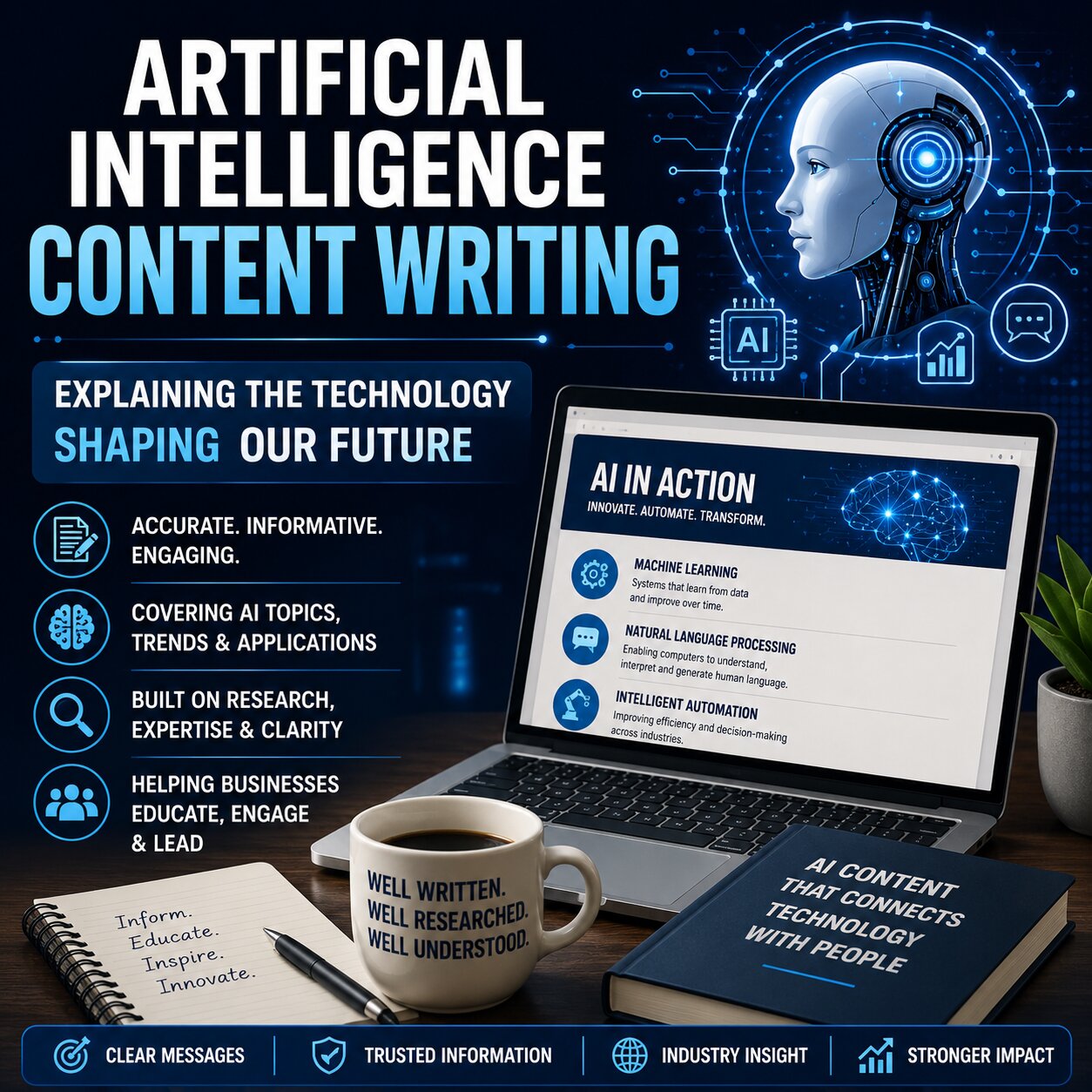
Artificial intelligence content writing is the specialised practice of creating informative, engaging and accurate content about artificial intelligence technologies, trends and applications. Unlike content generated by AI tools, this discipline focuses on writing about artificial intelligence for businesses, publications and audiences seeking to understand one of the world’s fastest-growing industries.
As AI continues transforming sectors such as healthcare, finance, manufacturing, education and entertainment, organisations need well-researched content that explains complex concepts in an accessible way. Artificial intelligence content writing helps bridge the gap between technical innovation and everyday understanding.
Whether the goal is educating customers, attracting new clients or establishing industry authority, quality AI-focused content plays an essential role in digital communication.
Why Artificial Intelligence Content Writing Matters

Artificial intelligence has become one of the most discussed technologies of the modern era. However, many AI concepts can be difficult for general audiences to understand without clear explanations.
Professional artificial intelligence content writing simplifies technical subjects while maintaining accuracy. Writers translate industry terminology into language that business leaders, consumers and decision-makers can easily follow.
Well-crafted AI content also helps organisations demonstrate expertise, answer common questions and build trust with readers who are researching emerging technologies.
As businesses increasingly adopt AI solutions, demand for educational and informative content continues to grow.
Topics Covered by Artificial Intelligence Content Writing

Artificial intelligence content writing spans a broad range of subjects across multiple industries. Depending on the target audience, articles may focus on technical innovations, business applications or emerging trends.
Common topics include:
- Machine learning and deep learning.
- Generative artificial intelligence.
- Natural language processing.
- Computer vision technologies.
- Robotics and intelligent automation.
Writers may also produce content covering AI ethics, cybersecurity, healthcare innovations, autonomous vehicles, predictive analytics and future technological developments.
The objective is always to provide readers with reliable information that improves understanding while supporting the organisation’s communication goals.
The Value of Industry Expertise
Producing effective artificial intelligence content writing requires more than simply understanding writing techniques. Authors must also stay informed about rapidly evolving technologies, research developments and industry terminology.
Technology writers often collaborate with engineers, developers, researchers and business leaders to ensure technical accuracy. Thorough research and fact-checking help create content that remains credible and valuable to readers.
Because artificial intelligence evolves so quickly, content also requires regular updates to reflect new breakthroughs, regulations and commercial applications.
A knowledgeable writer can present complex information in a way that remains engaging without overwhelming the intended audience.
Helping Businesses Communicate AI Innovation

Artificial intelligence is influencing nearly every sector of the global economy, creating a growing need for clear, informative and trustworthy communication.
High-quality artificial intelligence content writing enables technology companies, software developers, consultancies and research organisations to explain their products, services and innovations with confidence. From educational blog articles and white papers to case studies and industry news, professional AI content helps organisations establish authority while improving search visibility and audience engagement.
As artificial intelligence continues reshaping industries around the world, businesses that communicate these developments effectively will be better positioned to educate customers, strengthen their brands and lead conversations about the future of technology.