
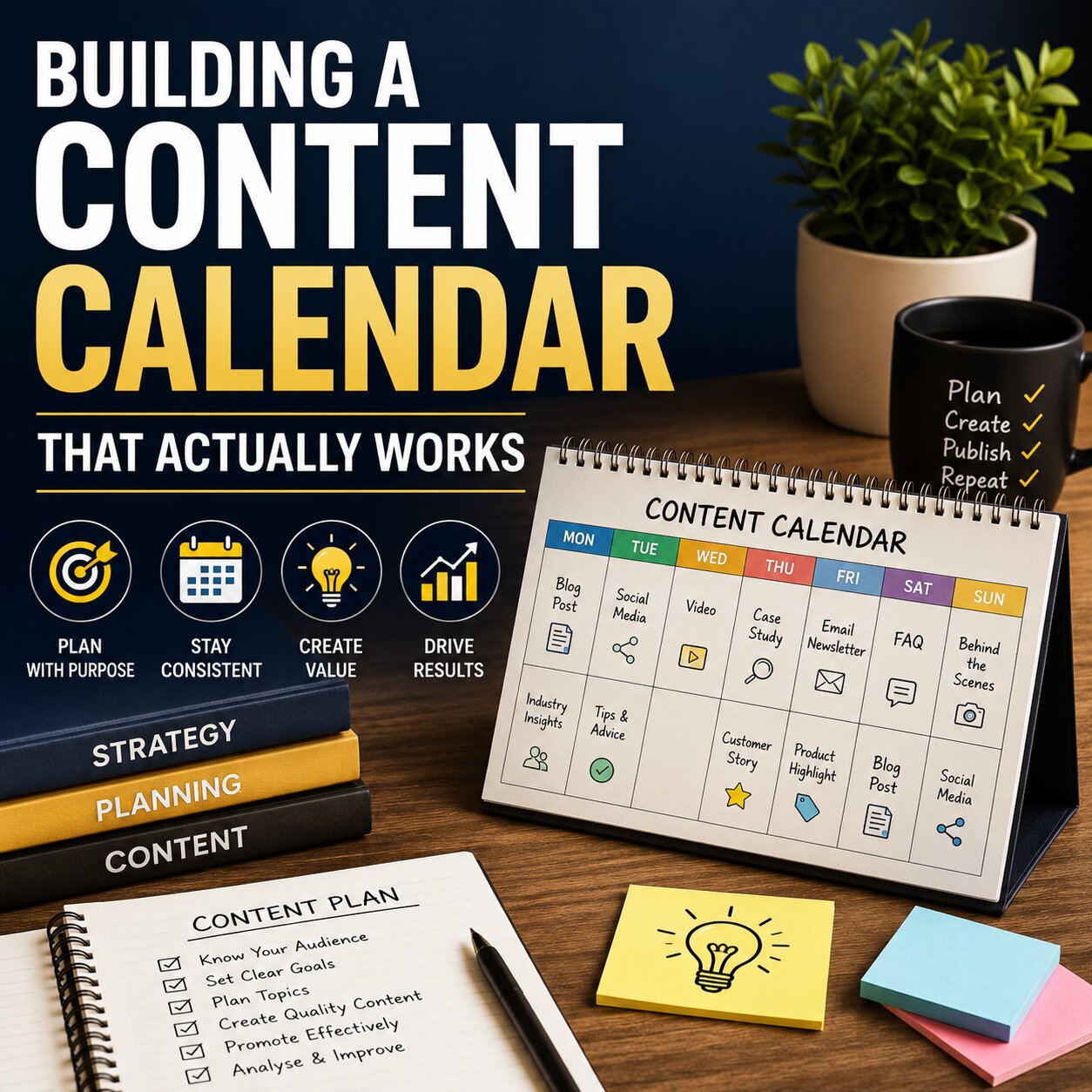
Many businesses understand the importance of consistent content marketing, yet few manage to maintain it over the long term. Blogs go quiet, social media posts become sporadic, and marketing campaigns lose momentum because content planning often relies on inspiration rather than a structured process.
The solution is to create a content calendar that actually works. A well-designed content calendar helps businesses stay organised, maintain consistency, align content with business goals, and reduce the stress of constantly wondering what to publish next.
Whether you manage a small business website or a large-scale content operation, a practical content calendar can become one of your most valuable marketing tools.
Start with business goals, not content ideas

One of the biggest mistakes businesses make is building a content calendar around random ideas. While creativity is important, effective content should always support broader business objectives.
Before planning topics, determine what you want your content to achieve. Goals may include generating leads, improving search engine visibility, increasing brand awareness, supporting customer retention, or educating potential clients.
Once your objectives are clear, content topics become easier to identify. Every article, video, newsletter, or social media post should contribute to one or more business goals.
This approach ensures your content calendar remains strategic rather than becoming a collection of disconnected ideas.
Build content around key themes

Successful content calendars are usually built around content pillars or core themes that support the business.
For example, a content writing agency might focus on themes such as content strategy, SEO, copywriting, marketing psychology, storytelling, and business communication. These themes create structure while still allowing flexibility and creativity.
Content pillars also help maintain consistency. Instead of constantly searching for new topics, you can create multiple articles and campaigns around each core theme.
Over time, this approach strengthens topical authority and creates a more cohesive experience for your audience.
Plan content formats and publishing frequency
A content calendar should include more than article titles. It should clearly define content formats, publishing schedules, distribution channels, and responsibilities.
Consider planning:
- Blog articles
- Social media posts
- Newsletters
- Case studies
- Videos
- Guides and resources
- Client success stories
Consistency is often more important than volume. Publishing one high-quality article every week is generally more sustainable than attempting daily content production that cannot be maintained.
The best content calendar is one your team can realistically execute.
Leave room for flexibility

Many content calendars fail because they are too rigid. Industries change, trends emerge, and unexpected opportunities appear throughout the year.
A good content calendar provides structure while still allowing flexibility for timely content, breaking news, industry developments, and seasonal opportunities.
Consider leaving some publishing slots open each month for reactive content. This allows your business to remain relevant without disrupting your overall strategy.
The most effective calendars balance long-term planning with the ability to adapt when circumstances change.
Make your content calendar a living system
A content calendar should not be created once and then forgotten. It should evolve as your business, audience, and marketing goals change.
Regularly review performance metrics to identify what content resonates most with your audience. Look at website traffic, engagement rates, conversions, lead generation, and search rankings to guide future planning.
Over time, patterns will emerge that help refine your strategy and improve results.
Turn your content calendar into a growth engine
Building a content calendar that actually works requires more than filling dates with topics. It involves aligning content with business goals, creating sustainable publishing schedules, maintaining flexibility, and continuously improving based on performance data.
At Formula Write Solutions, we help businesses develop content strategies, editorial calendars, and content production systems that support long-term growth. If you need help planning, creating, or managing your content marketing efforts, contact us today to discuss your goals.