Search engine optimisation continues to play a major role in helping businesses improve online visibility, attract qualified traffic, and generate leads. While many companies focus heavily on backlinks and advertising campaigns, strong on-page SEO remains one of the most important foundations for long-term digital growth.
On-page SEO refers to the optimisation of elements directly on a website, including content, headings, metadata, images, structure, and internal linking. These factors help search engines understand what a page is about while improving the overall experience for visitors.
For business websites, effective on-page SEO can increase rankings for important keywords, improve click-through rates, and encourage visitors to stay engaged for longer periods. Even small improvements across multiple pages can have a significant impact over time.
Modern search engines also place increasing emphasis on user experience. Websites that load quickly, provide helpful information, and maintain clear structure are more likely to perform well in search results than poorly organised or outdated sites.
Keyword Optimisation and Content Structure

Every successful on-page SEO strategy begins with proper keyword research and content planning. Businesses need to identify the search terms their audience is actively using and naturally integrate those keywords throughout website pages.
Primary keywords should appear in critical locations such as page titles, headings, introductions, URLs, and meta descriptions. However, keyword usage must remain natural and readable. Overusing keywords can damage readability and may negatively affect rankings.
Content structure is equally important. Search engines favour content that is organised logically and easy for users to scan. Headings and subheadings help guide both readers and search engines through the page while improving overall clarity.
Business websites should also focus on creating genuinely valuable content rather than simply targeting search engines. Helpful articles, service explanations, FAQs, and educational resources tend to perform better because they satisfy user intent.
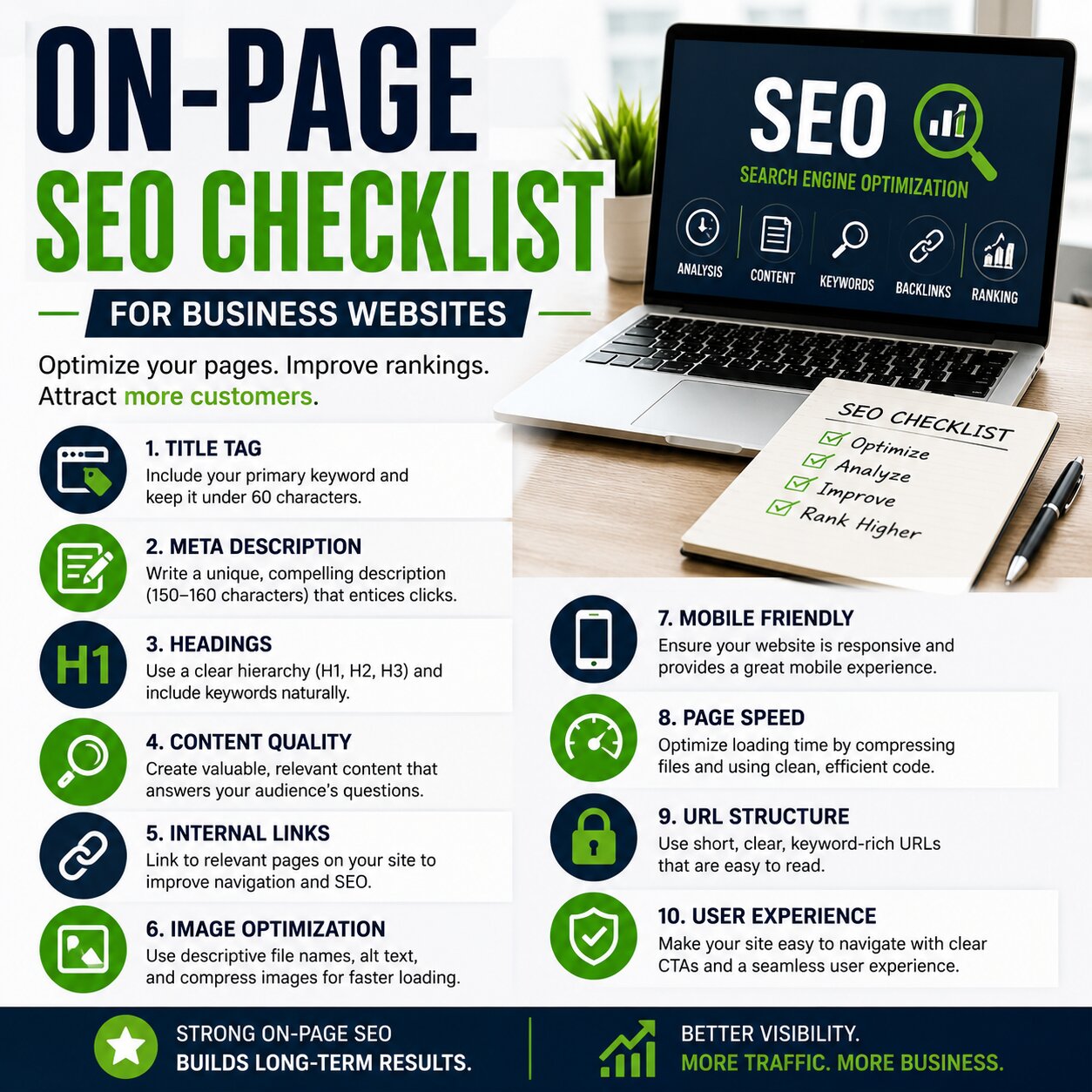
Important content optimisation elements include:
- Primary keyword placement
- Optimised title tags
- Compelling meta descriptions
- Proper heading hierarchy
- Internal linking structure
- Readable URL structure
- Image optimisation
- Mobile-friendly formatting
Well-structured pages also encourage visitors to remain on the website longer, improving engagement metrics that may indirectly support search visibility.
Technical Elements That Support Rankings

Strong on-page SEO extends beyond written content. Technical optimisation plays a major role in helping websites perform effectively in search results and deliver a positive user experience.
Page speed is one of the most important ranking factors. Slow-loading websites frustrate users and often experience higher bounce rates. Businesses should optimise images, reduce unnecessary scripts, and use reliable hosting infrastructure to improve loading performance.
Mobile responsiveness is equally essential. Most users now browse websites on smartphones and tablets, meaning websites must display correctly across multiple screen sizes and devices. Search engines prioritise mobile-friendly websites in modern rankings.
Image optimisation is another commonly overlooked factor. Properly named image files, compressed image sizes, and descriptive alt text help improve accessibility while supporting SEO performance.
Technical SEO elements such as schema markup, secure HTTPS connections, clean navigation, and crawlable site architecture also contribute to stronger search visibility and improved indexing.
User Experience and Engagement Signals
Modern SEO increasingly overlaps with user experience design. Search engines aim to provide users with the best possible results, meaning websites that deliver strong usability often perform better over time.
Clear navigation structures help visitors find information quickly and encourage deeper site exploration. Business websites should avoid cluttered menus and confusing layouts that make important content difficult to access.
Internal linking strategies also improve user experience while supporting SEO. Linking related pages together helps search engines understand site structure and allows users to continue exploring relevant information naturally.
Calls-to-action should remain visible without disrupting readability. Whether encouraging contact form submissions, consultations, purchases, or newsletter signups, conversion-focused elements should integrate smoothly into the page design.
Trust signals such as testimonials, certifications, secure payment systems, and professional branding also contribute to stronger engagement and credibility. These factors help reassure visitors while improving overall perception of the business.
Building a Strong SEO Foundation

An effective on-page SEO checklist helps businesses create websites that perform well for both users and search engines. By focusing on content quality, technical optimisation, usability, and strategic keyword integration, businesses can improve visibility and strengthen long-term online growth.
SEO success rarely happens overnight, but consistent optimisation efforts across website pages can gradually improve rankings, increase traffic, and generate better lead opportunities. For many businesses, strong on-page SEO remains one of the most valuable long-term investments in digital marketing.