
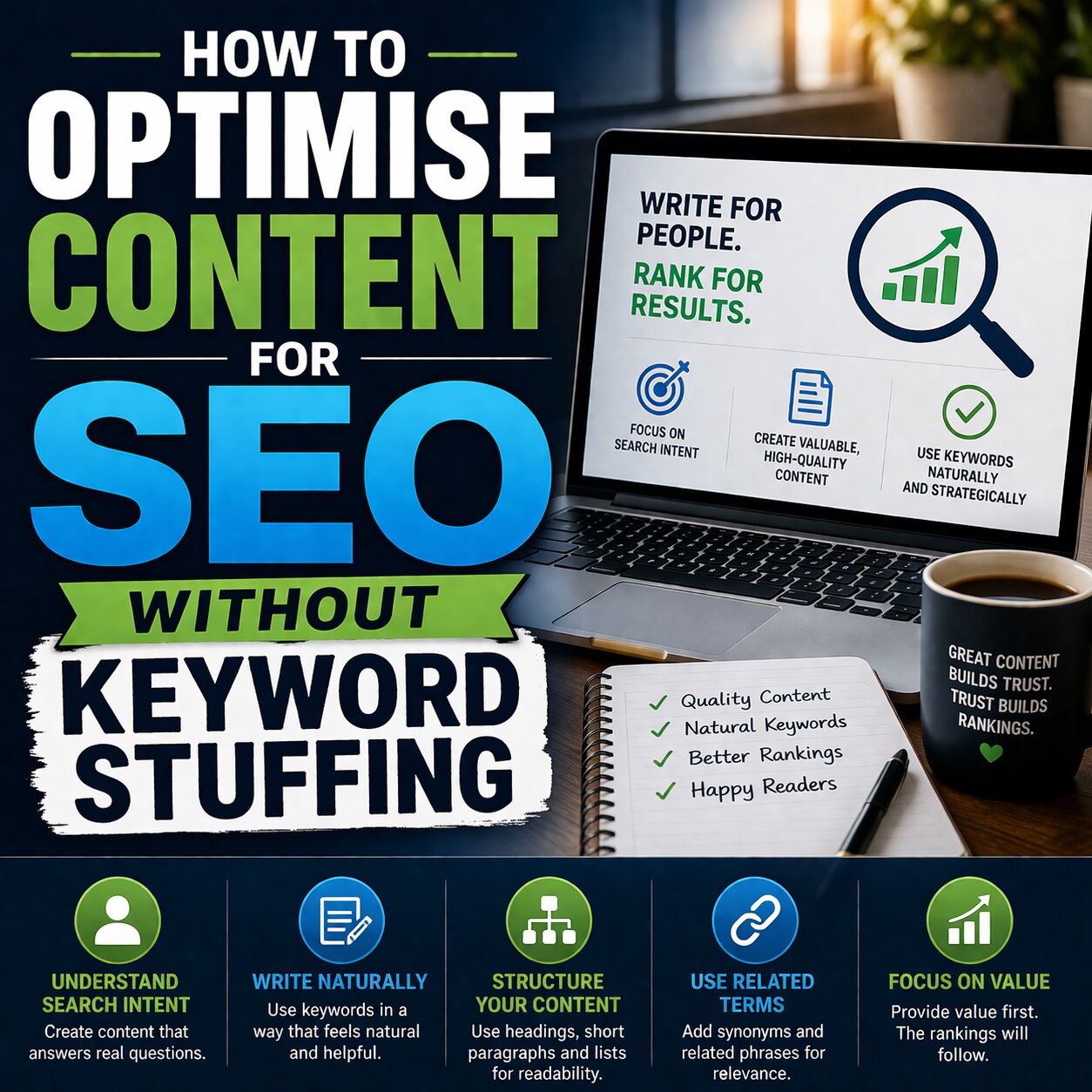
Search engine optimisation has evolved far beyond simply repeating keywords. Today, knowing how to optimise content for SEO without keyword stuffing is essential for ranking well while still delivering value to readers.
Search engines prioritise relevance, readability, and user experience. Overloading your content with keywords not only harms your rankings but also turns readers away. The goal is to create content that feels natural while still signalling to search engines what your page is about.
If you want sustainable results, it’s time to move beyond outdated tactics and focus on smarter optimisation strategies.
Why Keyword Stuffing No Longer Works

Keyword stuffing used to be a common tactic in early SEO strategies. Writers would repeat the same phrase as often as possible in hopes of ranking higher. However, modern algorithms are far more advanced.
Search engines like Google now understand context, intent, and natural language. Instead of rewarding repetition, they penalise content that appears manipulative or low quality.
Keyword stuffing also damages user experience. When readers encounter awkward, repetitive phrasing, they are more likely to leave the page quickly. This increases bounce rates and sends negative signals to search engines.
To optimise content for SEO without keyword stuffing, the focus must shift from quantity to quality and relevance.
Focus on Search Intent and User Value

The foundation of effective SEO content is understanding search intent. What is the reader actually looking for when they type a query?
There are different types of intent, including informational, navigational, and transactional. Your content should match the intent behind the keyword, providing clear and useful answers.
When you prioritise user value, keywords naturally fit into your content. Instead of forcing them in, they become part of a well-structured and informative piece.
This approach not only improves rankings but also builds trust with your audience. Readers are more likely to engage, share, and return to content that genuinely helps them.
Use Keywords Naturally and Strategically

To optimise content for SEO without keyword stuffing, keywords should be used strategically rather than excessively. Placement matters more than frequency.
Include your main keyword in key areas such as the title, introduction, headings, and conclusion. This helps search engines understand the topic without overwhelming the reader.
Use variations and related phrases instead of repeating the exact keyword. This creates a more natural flow and improves semantic relevance. Modern SEO rewards content that covers a topic comprehensively rather than narrowly focusing on one phrase.
Writing naturally should always come first. If your content reads well to a human, it is far more likely to perform well in search results.
Structure Content for Readability and SEO
Content structure plays a significant role in both user experience and search performance. Clear headings, short paragraphs, and logical flow make your content easier to read and understand.
Breaking content into sections helps readers scan for information quickly. This is especially important for online audiences who prefer concise and digestible content.
Using headings that include your keyword or related phrases also improves SEO. It reinforces the topic while guiding both readers and search engines through your content.
Well-structured content keeps readers engaged longer, which can positively impact rankings over time.
Best Practices to Avoid Keyword Stuffing
Here are some practical ways to optimise content for SEO without keyword stuffing:
- Use your main keyword naturally within the content
- Include synonyms and related terms for variety
- Focus on answering the reader’s question clearly
- Avoid forcing keywords into every sentence
- Write for humans first, then refine for SEO
- Keep keyword density balanced and natural
- Use headings to organise content effectively
- Prioritise clarity and readability over repetition
Following these practices ensures your content remains engaging while still being optimised for search engines.
Building Long-Term SEO Success
Learning how to optimise content for SEO without keyword stuffing is about adapting to modern search standards. It requires a balance between technical optimisation and high-quality writing.
Content that performs well today is informative, engaging, and aligned with user intent. It provides real value while subtly incorporating SEO elements in a natural way.
By focusing on quality over shortcuts, you create content that ranks better, attracts the right audience, and delivers long-term results.