
Creating blog content in 2026 is no longer just about writing informative articles and publishing them online. Businesses, publishers, and creators now compete in a highly saturated digital environment where search engines and readers both expect structured, valuable, and engaging content experiences. Even well-written articles can struggle to perform if the structure is confusing, difficult to scan, or poorly optimised for modern SEO practices.
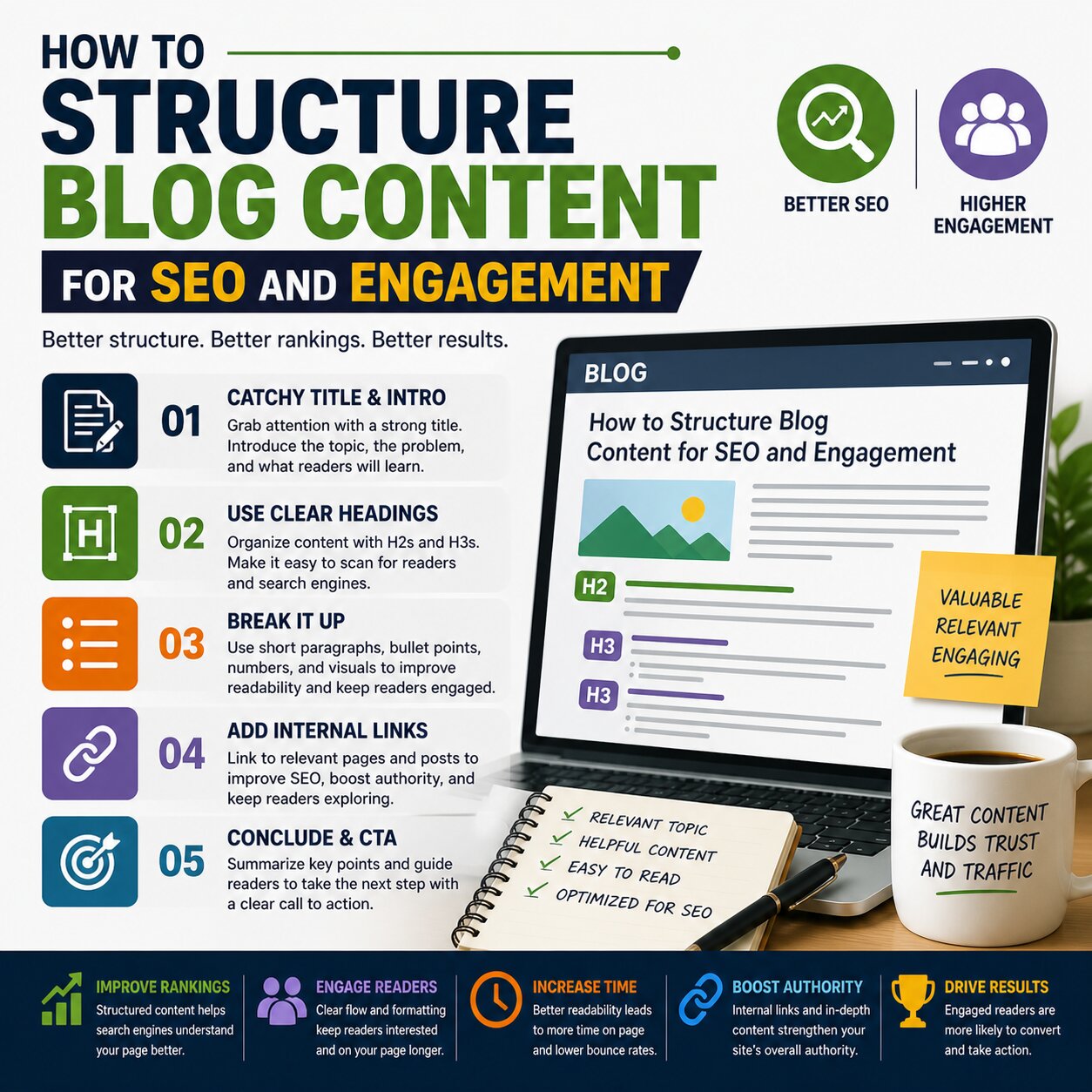
Understanding how to structure blog content for SEO and engagement is essential for improving visibility, reader retention, and conversion potential. Search engines reward content that is organised clearly and satisfies user intent, while readers are more likely to stay on pages that are easy to navigate and enjoyable to consume.
A strong content structure helps guide readers naturally through an article while improving readability across desktop and mobile devices. From headlines and introductions to headings, formatting, internal links, and conclusions, every part of a blog article contributes to both search engine performance and audience engagement.
Why Blog Structure Matters For SEO

Search engines rely heavily on structure to understand what content is about and how valuable it may be to users. Properly organised blog posts make it easier for search engines to crawl, interpret, and index information accurately.
Clear heading hierarchies using H1, H2, and H3 tags help define topic relationships within an article. This improves keyword relevance while also helping search engines identify important sections of the page. Structured content also increases the likelihood of appearing in featured snippets, AI-generated summaries, and enhanced search results.
User behaviour signals also play a role in SEO performance. If visitors quickly leave a page because the content feels overwhelming or difficult to follow, search engines may interpret this as a poor user experience. Well-structured blog content can improve time on page, scrolling behaviour, and interaction rates.
In addition, modern SEO increasingly focuses on satisfying user intent rather than simply repeating keywords. Structured articles help readers find answers quickly while encouraging them to continue reading deeper into the content.
Start With A Strong Headline And Introduction
The headline is often the first thing readers and search engines encounter. Effective blog titles should clearly communicate the topic while encouraging clicks through relevance and curiosity. Strong SEO headlines often include target keywords naturally while promising value to the reader.
The introduction should immediately explain what the article covers and why it matters. Readers typically decide within seconds whether they want to continue reading, making the opening section extremely important for engagement.
A strong introduction usually includes:
- The problem or topic being addressed
- Why the topic matters
- What readers can expect to learn
- A natural inclusion of the primary keyword
Avoid overly long introductions that delay the main topic. Modern readers prefer getting to the value quickly.
Use Clear Headings And Logical Content Flow

One of the most important aspects of learning how to structure blog content for SEO and engagement is understanding content hierarchy. Headings help break information into manageable sections while improving readability and scanning behaviour.
H2 headings should introduce major sections of the article, while H3 headings can organise supporting details underneath them. This creates a logical flow that guides readers naturally from one concept to the next.
Clear headings also help mobile users navigate long-form content more efficiently. Since many readers skim articles before fully reading them, descriptive headings improve the chances of keeping visitors engaged.
Logical progression is equally important. Each section should build naturally on the previous one instead of jumping randomly between unrelated ideas.
Improve Readability With Formatting Techniques

Large blocks of text can quickly overwhelm readers, especially on mobile devices. Formatting plays a major role in engagement by making content easier to consume visually.
Effective readability techniques include:
- Short paragraphs
- Bullet point lists
- Numbered steps
- Bold emphasis for important concepts
- White space between sections
- Clear sentence structure
- Simple language where appropriate
Well-formatted blog content helps reduce reader fatigue while increasing the likelihood that users will continue scrolling through the article.
Readability is also important for accessibility. Clear formatting benefits users across different devices, screen sizes, and reading preferences.
Optimise Internal Linking And Content Depth

Internal links help search engines understand relationships between pages while encouraging readers to explore more content across a website. Strategic internal linking improves navigation and can strengthen overall site authority.
When structuring blog content, internal links should feel natural and relevant rather than forced. Linking to related articles, guides, service pages, or category hubs helps extend user journeys while supporting SEO goals.
Content depth is another important factor. Search engines increasingly favour comprehensive content that fully addresses user intent. This does not necessarily mean making articles excessively long, but rather ensuring they provide meaningful value and sufficient detail.
Well-structured long-form content often performs strongly because it allows writers to explore topics thoroughly while maintaining organisation and readability.
Include A Strong Closing Section And CTA
Many blogs lose opportunities by ending abruptly without guiding readers toward the next step. A strong closing section helps reinforce the main topic while creating a sense of completion.
The ending may summarise key takeaways, highlight the importance of the topic, or encourage readers to apply what they learned. This section can also naturally include calls to action depending on the goals of the website or business.
Common CTAs may include:
- Contacting the company
- Exploring related services
- Reading additional articles
- Downloading resources
- Joining newsletters
- Sharing the article
The CTA should align naturally with the content instead of feeling overly promotional.
Structured Content Creates Better Results
Understanding how to structure blog content for SEO and engagement is essential for modern digital publishing. Strong structure improves search visibility, readability, reader retention, and conversion potential while helping content perform more effectively across search engines and devices.
As competition online continues increasing in 2026, businesses and creators can no longer rely on unstructured writing alone. Clear organisation, strategic formatting, logical flow, and reader-focused design all contribute to stronger content performance.
By combining SEO best practices with engaging user experiences, well-structured blog content can help businesses build authority, attract audiences, and generate long-term organic growth through content marketing. Contact us if you need assistance!